Trending


Fragging a soft coral is one of the more rewarding jobs in reefkeeping. You get free corals, the parent colony gets a trim, and a friend gets something new for their tank. It is also the point where plenty of reefkeepers learn the hard way that soft corals answer back — not with stings, but with slime, stress and a display tank that turns hazy by teatime. The cuts themselves are simple. It is the preparation around them that decides whether everything comes out healthy.
Soft corals have no stony skeleton to cut through. Their tissue sits on a fleshy base, which is why a clean slice heals quickly and why a small fragment of a mushroom or a leather can grow into a whole new colony. That same softness means blunt tools do real damage: crushed tissue dies back, and the die-off is what invites infection.
The bigger issue is chemistry. Disturbed soft corals release defensive compounds into the water, and in a closed system those compounds build up fast. Cut a toadstool in your display, walk away, and you may come back to a cloudy tank and clamped-up fish. Work in a container of tank water where you can, and have fresh activated carbon running for a day afterwards.
Set everything out first, so you are not hunting for scissors with a slippery coral in one hand and a dripping frag in the other.
Mushrooms and ricordea forgive almost anything. Lift one off its rock with a fingernail, a razor blade or a slow twist, then cut straight across the oral disc so that every piece keeps part of the mouth. Halves or quarters are plenty; slicing a mushroom into a paste produces frags that sulk instead of settling. A quartered mushroom commonly becomes four new mushrooms within a few weeks.
There is a slower, tidier approach if you would rather not cut at all. Put a piece of rubble beside the mushroom in a low-flow corner and let it crawl onto the stone by itself, then snip the tissue joining the two. Ricordea are slower and more delicate than the common Discosoma and Rhodactis types, so keep cuts larger and fewer with them.
Zoanthids and palythoas carry palytoxin, which is genuinely dangerous and deserves respect. The risk rises sharply when the tissue is damaged, heated or turned into mist, so never boil or scrub rock covered in them, and never work on them dry in a closed room. Gloves and eye protection are not optional, and an open window is a sensible habit even for a five-minute job. If you feel unwell afterwards, seek medical advice rather than waiting to see how it develops.
For the cut itself, prise a clump off the rock with a scalpel or coral cutters, then divide the mat so each frag carries three or more polyps. Dry the base briefly with kitchen paper, add a blob of gel glue, and hold the frag in place for a few seconds. Zoanthids are the one soft coral group I would always cut outside the main tank, in a container of tank water, with carbon running back in the display.
Toadstools, finger corals, Kenya trees and their relatives are the easiest soft corals to propagate and the messiest to mount. Snip a two to four centimetre branch from a finger coral, or cut a wedge from the rim of a toadstool; the cut edge of the parent will seal over and later grow back into a natural shape. You can even take the whole head off a toadstool and let the stalk regrow, though give it a fortnight of stable conditions before you judge the result.
Attaching leathers with glue alone rarely works, because the base stays wet and slippery. Better options:
However you mount them, the first fortnight is mostly about leaving things alone. Keep new frags in moderate flow and moderate light — enough movement to carry waste away, not so much that they get battered. Poking a frag every morning to check whether it has attached is the most common reason it never does.
Run activated carbon for a day or two after any fragging session; the yellowing compounds soft corals release are exactly what it removes. Expect frags to look poor at first: shrunken, pale and coated in slime. That is normal. New growth appears as a lighter rim of tissue creeping over the cut, often in the second or third week.
A healthy colony recovers quickly; a stressed one does not. Take no more than roughly a third of a coral in one session, and leave it a few weeks before going back for more. Never frag a coral that has just arrived, just been moved, or is already sulking after a temperature or salinity swing.
Keep the water stable, run carbon, and let the colony tell you when it is ready. If you plan to trade or sell frags, check the rules where you live — collection and sale of corals is regulated in some places, even when the coral started life in your own tank. Cut carefully, mount simply, and let the corals do the rest.
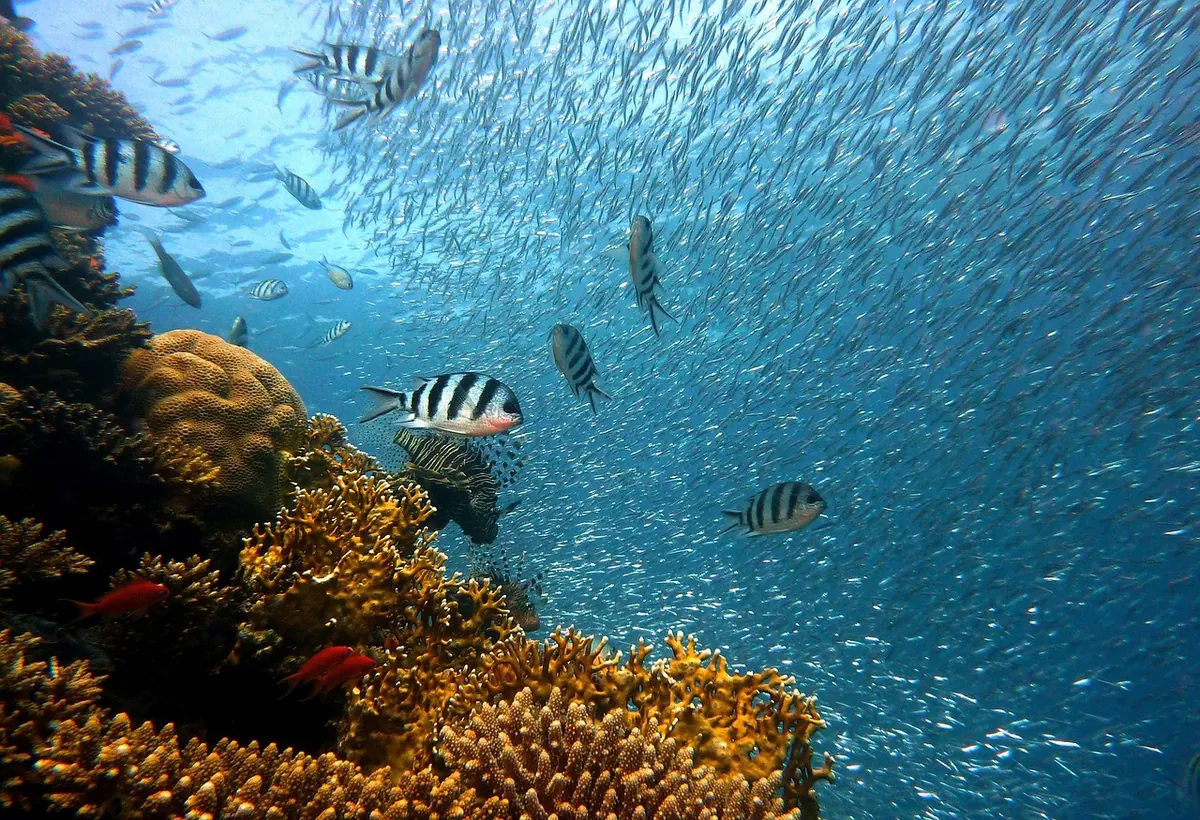
Photo: Pexels / Pixabay